Smelly air conditioner: identifying the odour, tracing its source and dealing with it for good

The ClimExpertise team
5 Nov 2026 - 05 min to read
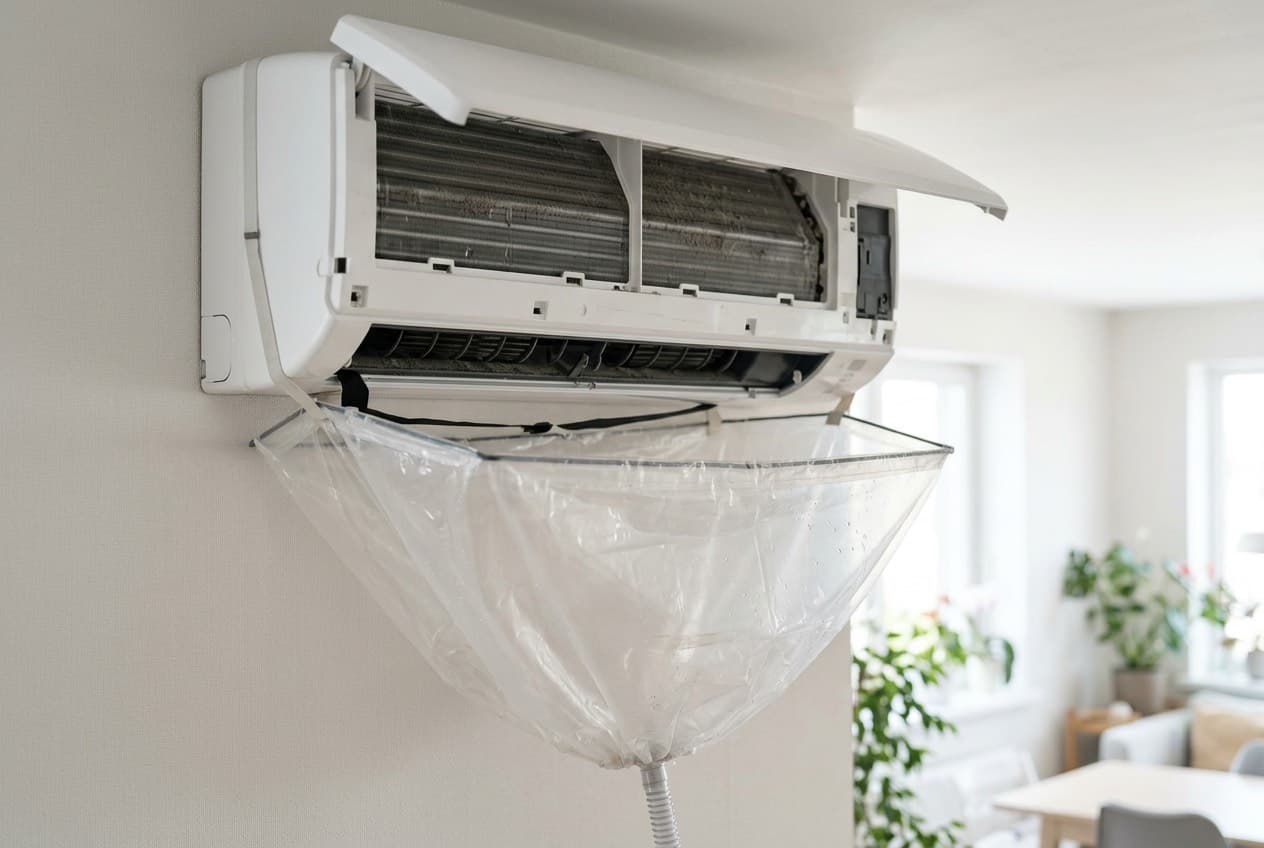
You switch on the air conditioner and an unpleasant smell fills the room. Sometimes it fades after a few minutes, sometimes it does not. Either way, it is telling you something: a clean, properly installed air conditioner does not smell of anything.
The good news is that each smell has a fairly precise origin. Describing it accurately tells you whether a simple step will do, whether a thorough clean is needed, or whether you should switch the unit off straight away.
Why an air conditioner ends up smelling
In cooling mode, the indoor unit's coil is colder than the room air. Moisture in the air condenses on it, runs into a tray, then drains away through a pipe. That is normal and useful: it is how the unit dries the air.
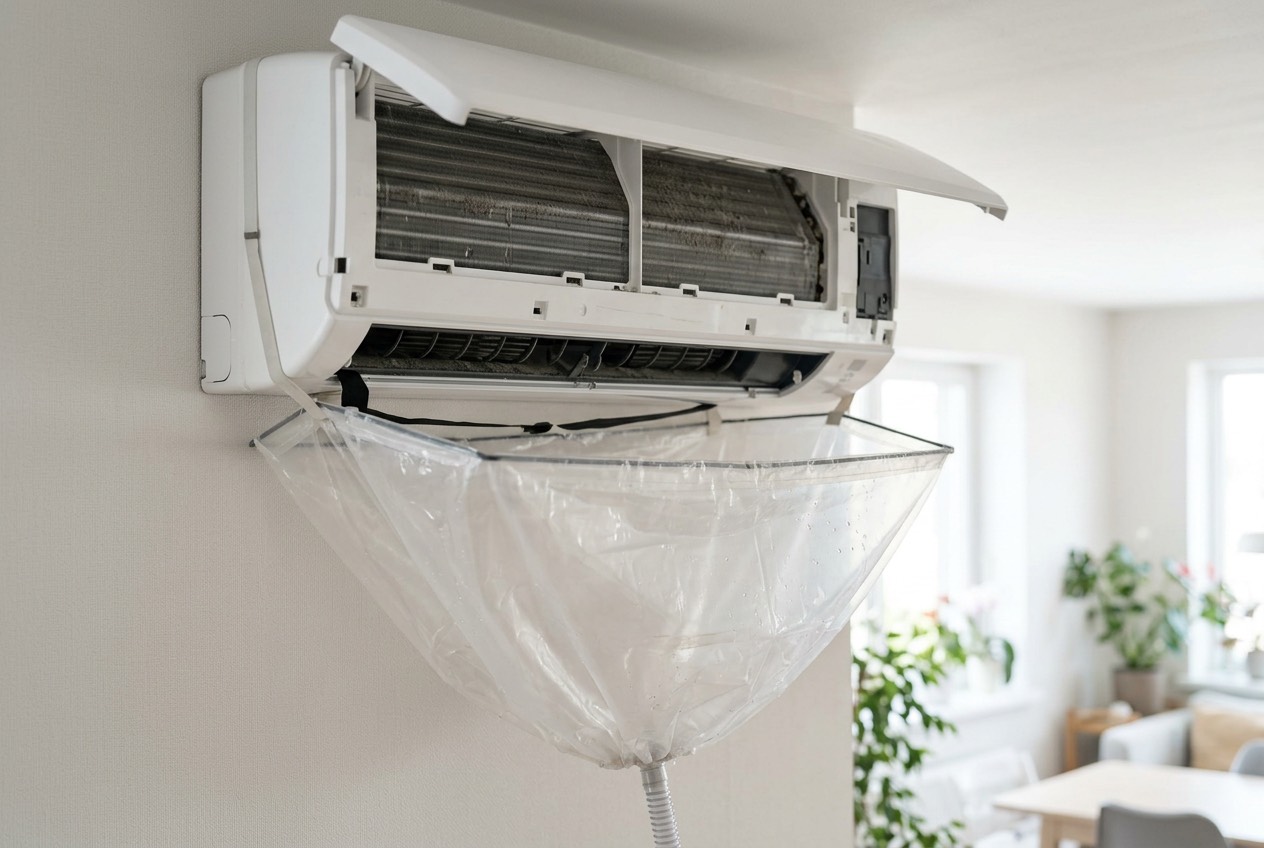
When the unit stops, the coil stays damp, out of the light, at room temperature. Fine dust and cooking particles that get past the filters settle on it. Together, these conditions encourage mould and a bacterial biofilm, which gradually spreads to the fan, the bladed cylinder that pushes air into the room, and to the condensate tray. On restart, air passes through these deposits and carries their smell with it.
Describing the smell to trace its source
| What you smell | Most likely source | What to do |
|---|---|---|
| Musty, cellar, damp laundry | Mould on the coil, fan or filters | Clean the filters, then plan a full clean |
| Sewage, rotten eggs | Condensate drain connected to waste water without a trap, or a dried-out trap | Have the drain connection checked |
| Sour, vinegar, "dirty socks" | Bacteria settled on the coil, often when heating mode starts | Clean with disinfection |
| Tobacco, cooking, perfume | Odours trapped in the filters and deposits | Clean the filters and coil |
| Chemical smell in the first days | New coatings and insulation | Wait a few days, report it if it persists |
| Burning, hot plastic | Electrical overheating | Switch off at the circuit breaker and call for help |
A burning smell is never solved by cleaning. Cut the power and contact our air conditioner repair service.
Conversely, do not rely on your nose to detect a refrigerant leak: in domestic air conditioning, a leak usually goes unnoticed by smell. It is the drop in performance and the readings that reveal it.
The special case of heating mode
Many people first notice the smell in autumn, the first time they switch to heating. That is no coincidence. Deposits built up over the summer on a damp coil are suddenly warmed, and their odorous compounds are released all at once. Defrost cycles, during which the unit briefly reverses its operation, can also bring moisture back onto dirty surfaces.
A faint smell of warm dust that disappears within minutes is nothing to worry about. A sour smell that returns every time the unit starts, on the other hand, means the coil needs a thorough clean before the cold season.
Checks you can do yourself
Without opening the casing or touching the connections, you can already:
- wash the filters in lukewarm water, without harsh detergent, and let them dry completely in the shade before refitting them; during the season, every two to four weeks;
- dry the coil before switching off: let the fan run on its own for about fifteen minutes after cooling, or use the automatic drying function if your model has one;
- check the drainage: with the unit running in cooling mode, water should flow steadily from the end of the drain pipe;
- refill the trap if the drain joins that of a little-used sink or basin: running the tap for a few seconds is sometimes enough to get rid of the sewage smell.
The air conditioner foam cleaner cans sold in supermarkets can freshen the front face of the coil. They reach neither the fan nor the tray, where most of the deposits often sit. Follow the instructions, never spray towards electrical components, and do not pour bleach into the tray: it damages some materials without removing the biofilm.
Cleaning with disinfection: what really makes the difference
When the smell returns despite clean filters, the source lies deeper. A full clean by an air-conditioning technician follows a precise sequence:
- power off, and protection of walls and floor with a collection cover under the unit;
- removal of the casing, filters and, if needed, the louvres;
- cleaning of the coil with a suitable product, then low-pressure rinsing;
- cleaning of the fan, in place or removed depending on its condition;
- cleaning of the tray, unblocking of the drain and a flow test;
- application of a disinfectant with recognised bactericidal and fungicidal properties;
- reassembly, restart and measurement of the temperature difference between return and supply air.
That last step matters. The deposits that smell also restrict airflow. After a full clean, the restored airflow often improves the cooling delivered to the room, and measuring it lets us confirm this rather than assume it. Everything is recorded in the written report handed over after the visit.
When cleaning is not enough
Some smells come back because their cause is not dirt:
- a poorly designed drain: a pipe sloping the wrong way where water stagnates, or a connection to waste water without a trap. Fixing it means reworking the installation;
- an oversized unit: it reaches the set point too quickly, stops, restarts. The coil never has time to dry, and the air is poorly dehumidified. We check this point during an air conditioning installation;
- a very damp room: close to a bathroom, poorly ventilated, with condensation on the windows. A dehumidifier can help on days when the air conditioner is off, but ventilating the home remains the real answer;
- a unit left idle for months: residual moisture has plenty of time to act. Running it in fan mode now and then limits stagnation.
Keeping smells from coming back
A few habits are usually enough:
- wash the filters regularly during the season;
- dry the coil after each cooling session;
- keep the room aired and avoid cooking directly under the unit's airflow;
- have the air conditioner serviced at least once a year, more often in a business exposed to grease or heavy footfall.
In a restaurant, bakery or hair salon, grease, flour or hair products clog things up faster. Two visits a year are often more suitable than one.
Getting back to neutral air in your home or your business
Our air conditioner servicing and cleaning covers the filters, coil, tray and drain, disinfection and check readings, for €130 including VAT for one indoor and one outdoor unit. For households, the air conditioner servicing for homes page describes the visit in detail.
Once the unit has been cleaned, our active vigilance keeps track of its condition and gets back in touch before the next season, so the smell does not return. Choose your slot on the booking page.
Have your air conditioner checked by an expert